The Search Ends. What Happens Next?
Missing-person stories are understandably organized around one urgent objective: find the person safely.
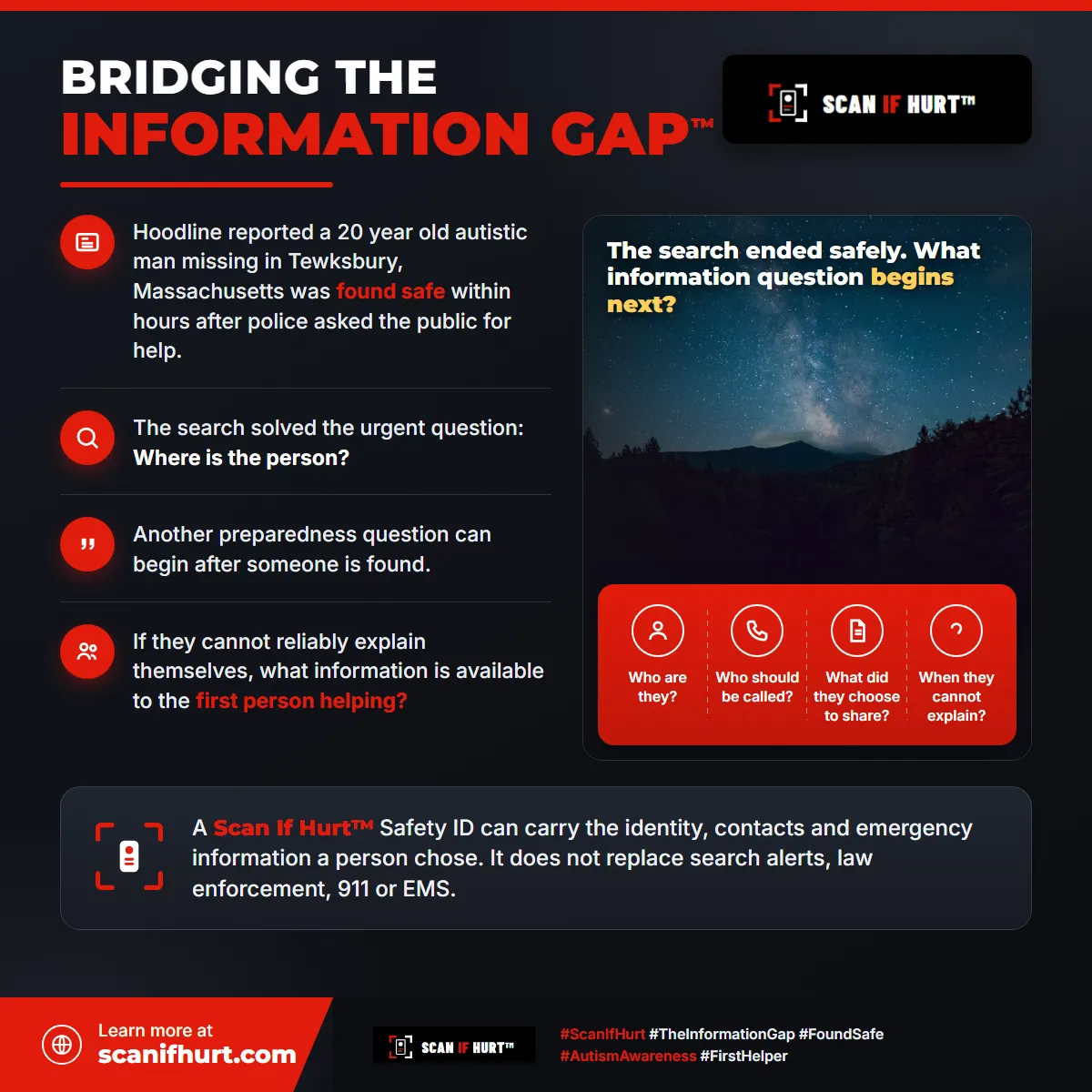
Hoodline reported August 30 that a 20-year-old autistic man in Tewksbury, Massachusetts was found safe after police issued a public alert and asked residents to help locate him. The outlet says no further details were released about where or how he was found.
That is exactly where speculation should stop.
It is also where a general preparedness question can begin.
Location is one problem; information after recovery can be another
Search alerts, law enforcement, community notifications and tracking programs are designed to help locate a missing or wandering person.
Once the person is found, a different situation may exist. In some cases, a found person may be confused, overwhelmed, injured or otherwise unable to reliably explain identity, emergency contacts or information they want helpers to know.
There is no evidence that happened in the Tewksbury case. The question is broader:
What information has been prepared in advance if the person cannot provide it themselves?
That post-recovery handoff is where Scan If Hurt™ fits. A Safety ID can make chosen identity, contact and emergency information available to the person helping, even when the person who was found cannot easily explain it themselves.
Repeated safe-recovery stories should not be dismissed as duplicates. They show that the underlying preparedness problem keeps appearing in real communities.
Finding someone safely is the goal. Preparedness can also consider what happens immediately after that goal is achieved.
Source: Hoodline, August 30, 2026.
