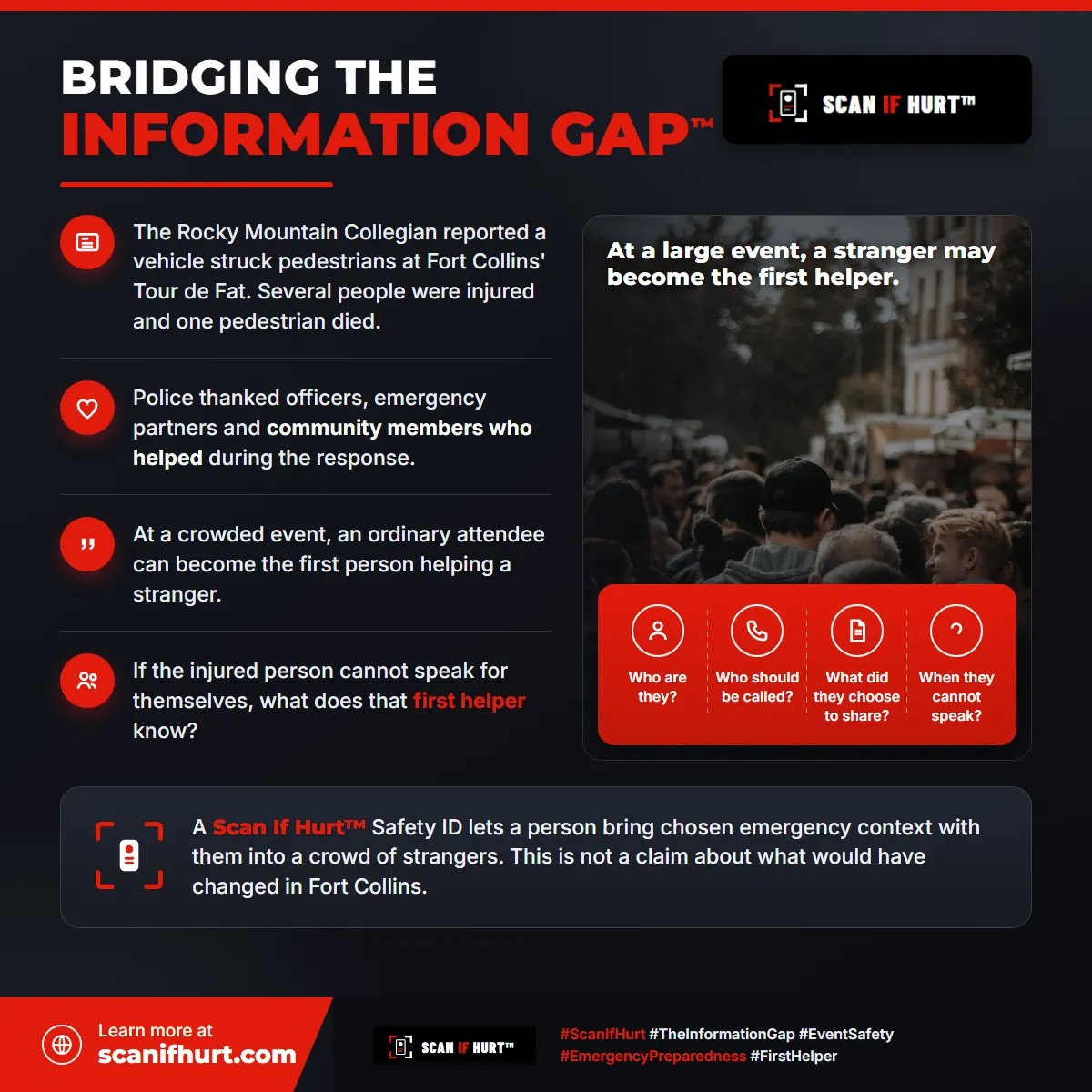
At a Large Event, a Stranger May Become the First Helper
Large public events are temporary communities.
Thousands of people can be gathered in one place, surrounded by people they do not know, away from the family, coworkers or friends who would normally recognize them and know important details.
The Rocky Mountain Collegian reported that a vehicle struck multiple pedestrians during Fort Collins' Tour de Fat bicycle parade on August 29. Several people were injured and one pedestrian died. Police Chief Jeff Swoboda thanked officers, emergency partners and community members who helped during the response.
The loss deserves respect, not speculation or promotion.
The community-help detail does raise a legitimate event-preparedness question that applies broadly.
First helpers are not always professionals
At a festival, race, convention or sporting event, the first person at someone's side may be another attendee.
That person may be willing to help and still know nothing about the injured individual.
If the person cannot speak for themselves, the information gap can begin before professional responders arrive—or continue until responders have personal context.
Scan If Hurt™ calls this The Information Gap™.
A Scan If Hurt™ Safety ID can let a person bring selected emergency context with them into a temporary community of strangers.
That person-level layer matters because event systems are built for the crowd, while the emergency still happens to one individual. Preparedness can account for both without turning this tragedy into a claim about what would have changed.
