When the Same Safe-Recovery Story Keeps Appearing, Pay Attention to the Pattern
A single missing-person story can feel isolated.
Several similar stories appearing within days begin to show a pattern.
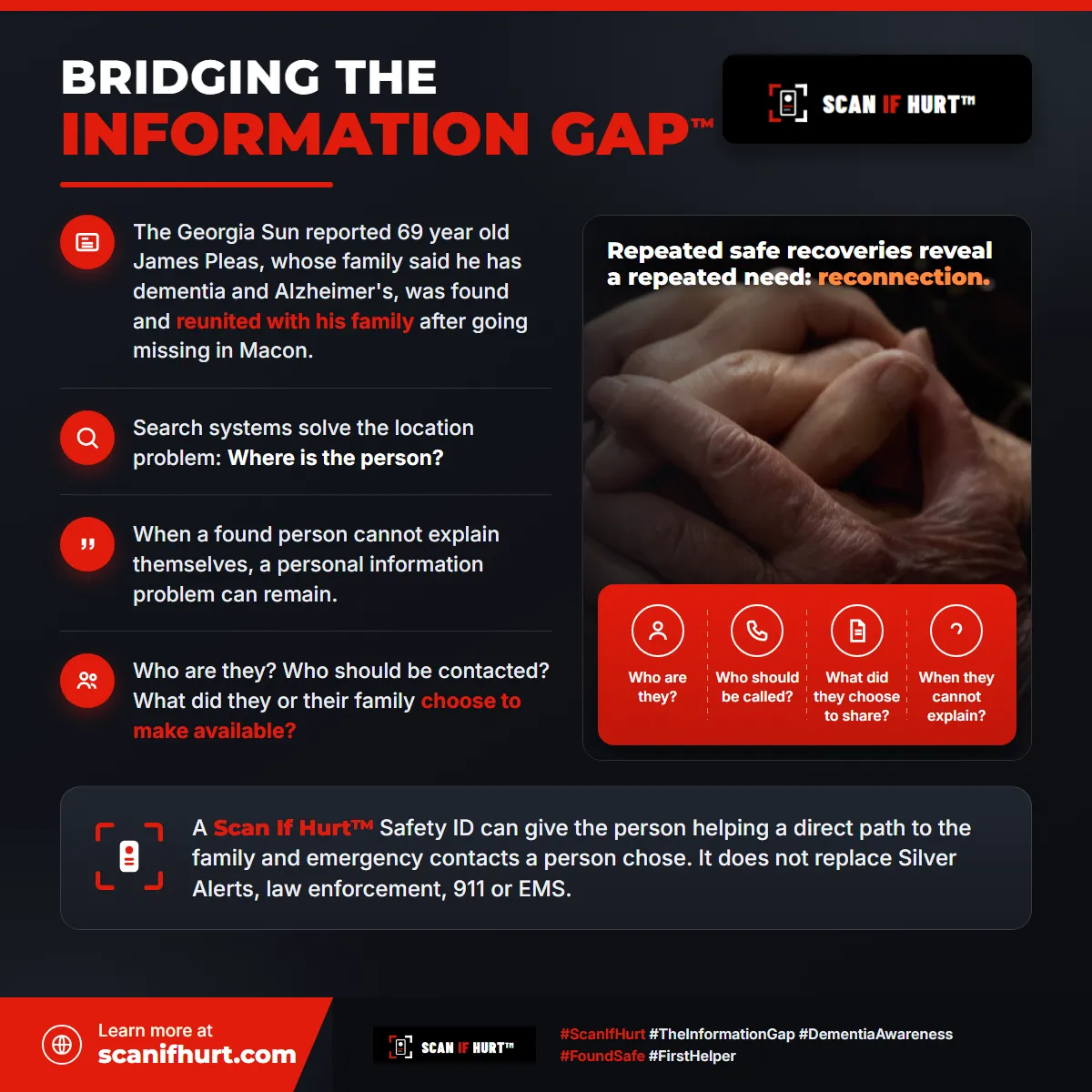
The Georgia Sun reported that 69-year-old James Pleas, whose family said he has dementia and Alzheimer's disease, was found and reunited with his family after being reported missing in Macon.
The outlet did not publish details about how or where he was found. There is no reason to speculate.
The safe outcome fits a broader current pattern: vulnerable adults and autistic people reported missing, public alerts issued, communities mobilized and families waiting for news.
Repetition is information
Repeated coverage does not make the subject less newsworthy from a preparedness standpoint. It demonstrates that the underlying situation recurs across communities.
Search systems, Silver Alerts, law enforcement and community notifications are designed to help locate someone.
A different information problem can exist after location is solved, particularly if a person is unable to reliably explain identity, emergency contacts or chosen emergency information.
That is one part of The Information Gap™ Scan If Hurt™ is designed to address: not the search itself, but the handoff back to the person's chosen circle of support.
A Safety ID can carry that contact path with the person instead of leaving it dependent on memory, an unlocked phone or someone familiar being nearby.
The repeated safe-recovery stories justify asking one more question:
What information is ready for the person who finds them?
