When a Responder Knows Communication May Be Different, What Comes Next?
Jacksonville-area police departments in Illinois are adding a simple visual cue to their emergency-response toolkit.
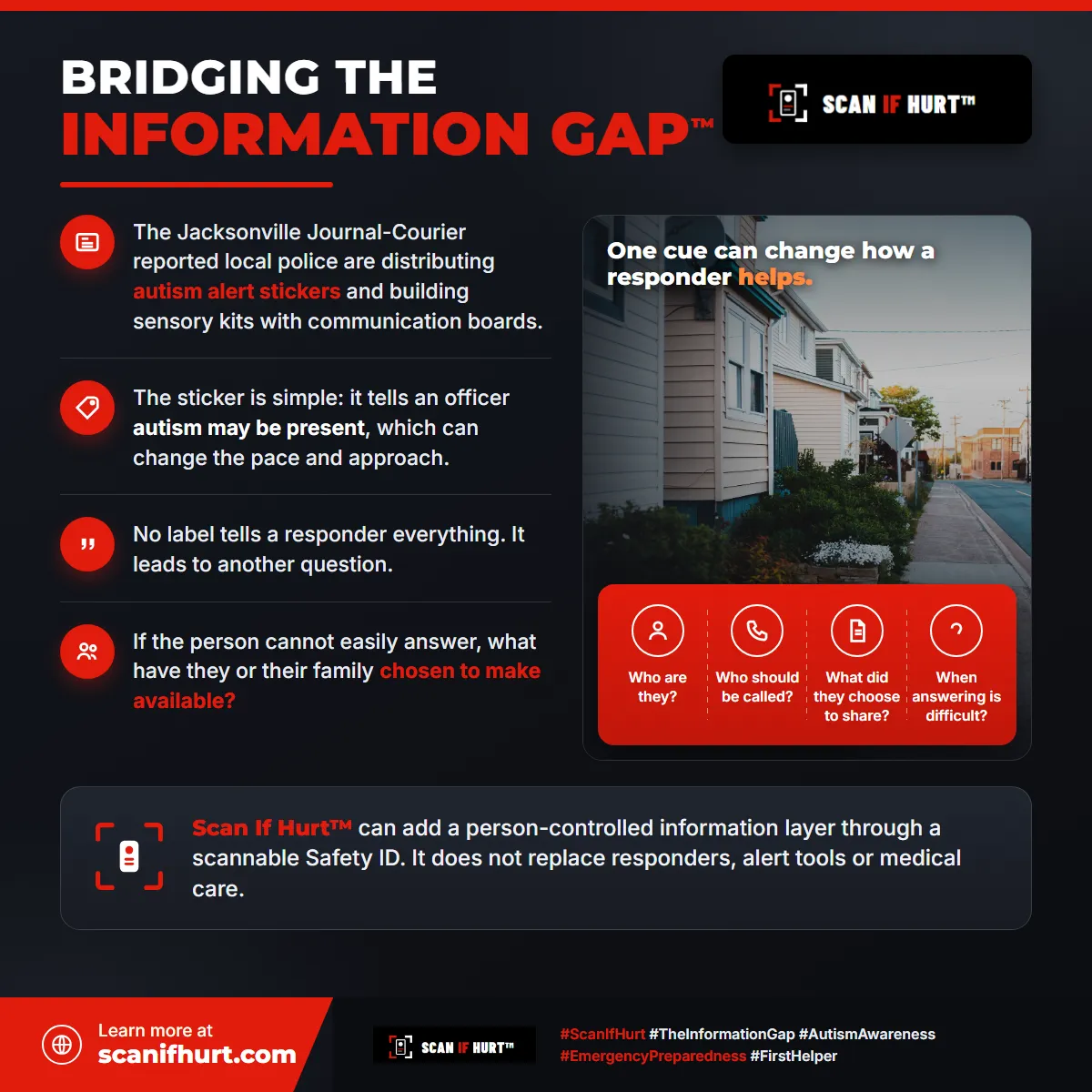
The Jacksonville Journal-Courier reported September 1 that police are distributing autism alert stickers for homes and vehicles. The departments also are developing sensory kits that can include communication boards and other tools.
The idea is practical: give the responding officer information before an interaction is misunderstood.
One cue can change the approach
The sticker does not try to explain everything about a person. It signals that autism may be present and that the officer may need to allow more time, adjust communication or use different tools.
That restraint is important. No label can tell a responder everything about an individual.
It does, however, lead to another question: what information has that individual or family chosen to prepare for a moment when speaking or answering may be difficult?
Scan If Hurt™ approaches that question from the person's side. A scannable Safety ID can provide access to selected emergency information controlled by the individual or family.
The local sticker and that chosen-information layer do different jobs. One can alert a responder to adapt the interaction. The other can help carry information the person may not be able to communicate in that moment.
The broader lesson is that emergency readiness improves when organizations design for real communication differences before the emergency begins.
