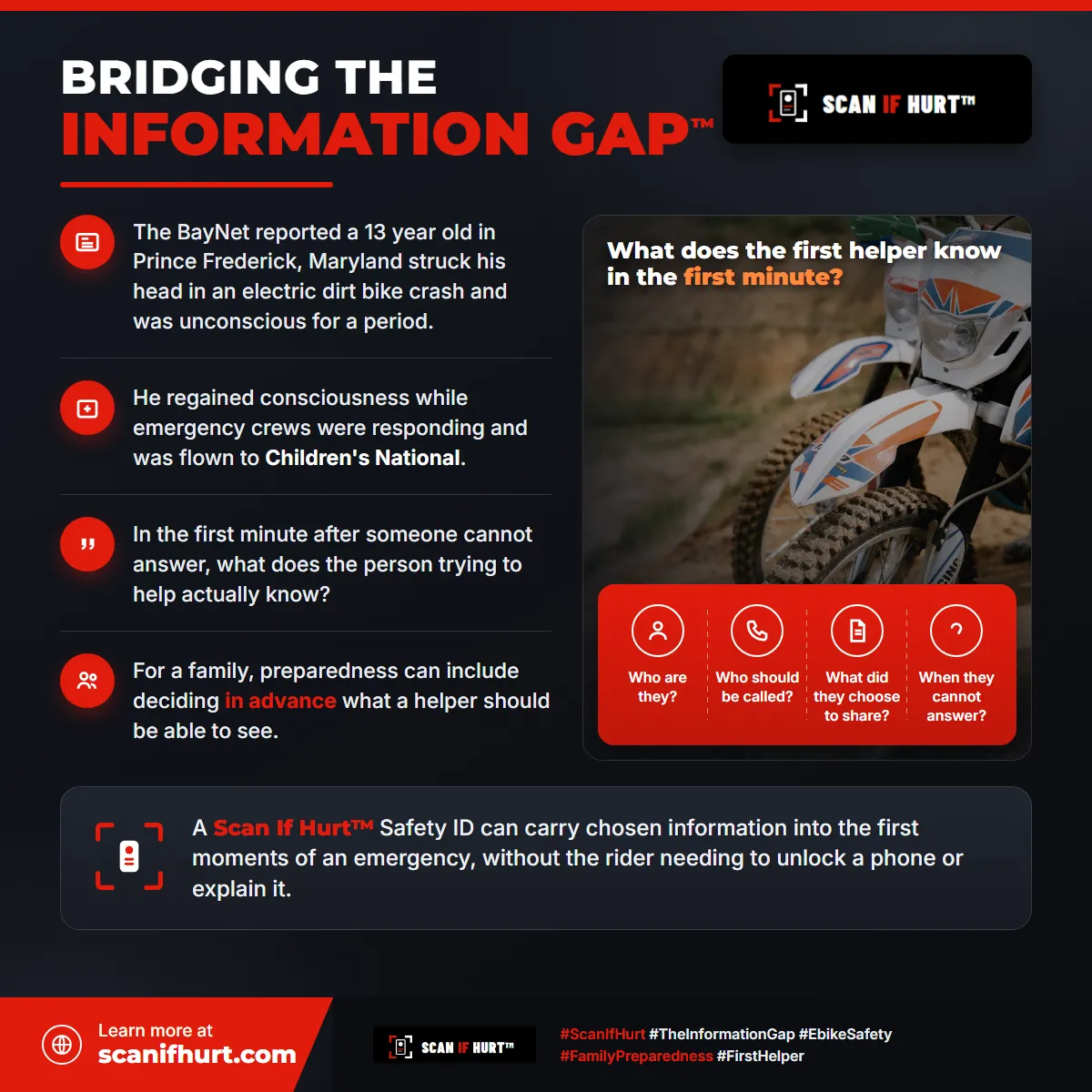
What Does the First Helper Know in the First Minute?
A sudden crash can create two problems at once. The first is obvious: someone may be injured and need immediate medical help. The second can be less visible: the injured person may temporarily be unable to explain who they are, whom to contact or what emergency information they chose to make available.
The BayNet reported August 30 that a 13-year-old in Prince Frederick, Maryland fell from an electric dirt bike, struck his head and was unconscious for a period. The report says he later regained consciousness while emergency crews were responding and was flown to Children's National Hospital.
There is no reason to speculate about what information responders had in this case or whether any additional information was needed. The broader preparedness question stands on its own.
The first 60 seconds can begin with very little context
When someone is conscious and able to answer, many basic questions can be resolved directly. When they cannot, the person trying to help may need to work with whatever is immediately available.
That person may be a parent, coach, passerby, teammate, employee or first responder.
What information has been prepared for the moment the injured person cannot provide it themselves?
That is part of what Scan If Hurt™ calls The Information Gap™.
What can travel with the rider?
A helmet and riding gear travel with the rider. Prepared emergency information can too.
A Scan If Hurt™ Safety ID can give a helper access to information the rider or family chose in advance—so the first useful personal context does not depend entirely on the rider being conscious, carrying an unlocked phone or having someone familiar nearby.
That is the narrower preparedness value: useful information is already with the person before the first question has to be asked.
Youth e-bike and electric dirt-bike safety discussions rightly focus on riding behavior, equipment, laws and injury prevention. Preparedness can include one more question too: If the rider cannot answer, what does the first helper know?
Source: The BayNet, August 30, 2026.
