When an E-bike Crash Turns a Stranger Into the First Helper
When an E-bike Crash Turns a Stranger Into the First Helper
E-bike safety conversations usually begin in the right place: prevention. Helmets, rider training, speed, road awareness and age-appropriate use all matter.
But a recent Johns Hopkins All Children's Hospital story highlighted another part of an emergency that receives far less attention.
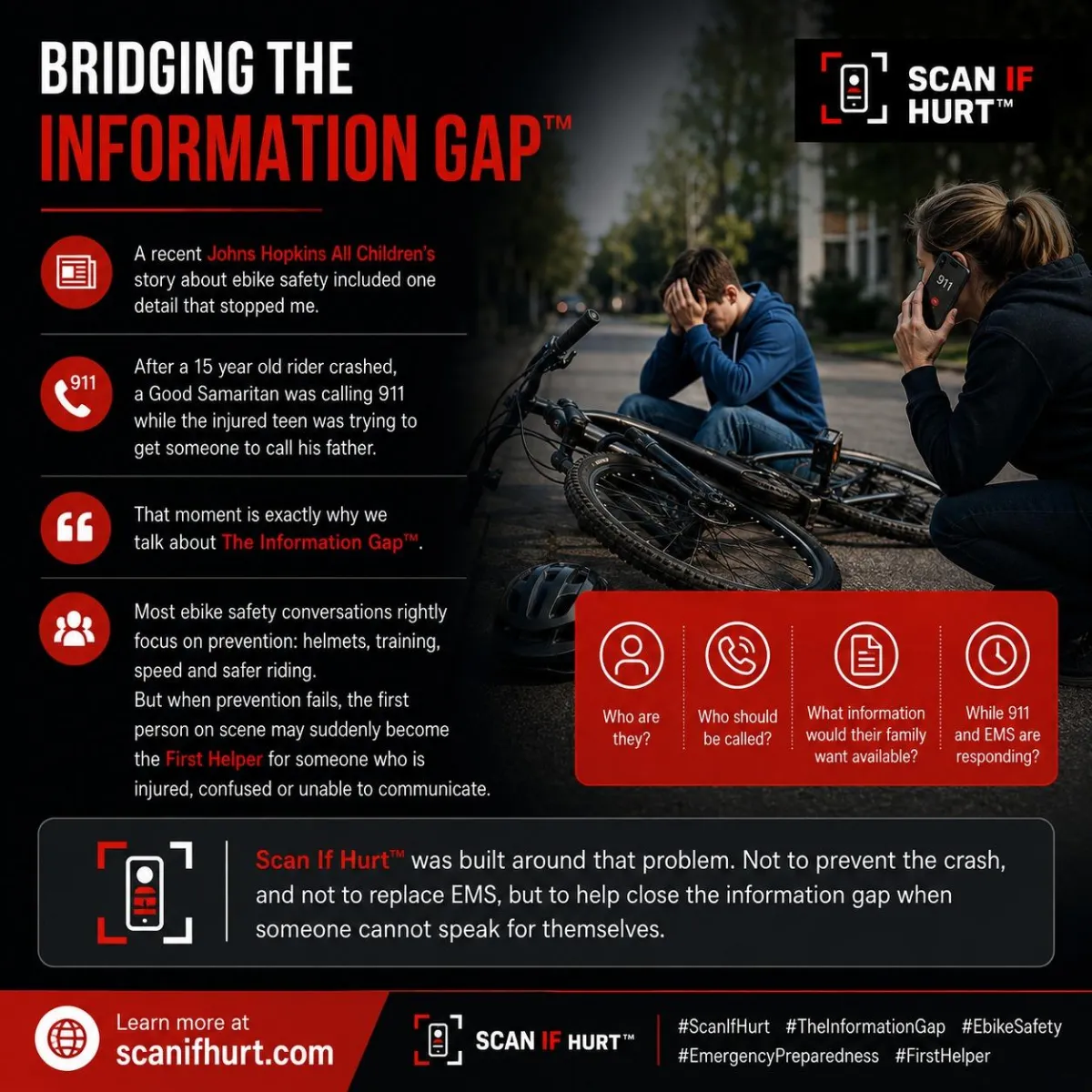
The article described a 15-year-old rider who crashed while riding an e-bike. After the collision, he recalled a Good Samaritan calling 911 while he was trying to get someone to call his father.
That small detail says a lot about what happens in the first minutes after a serious accident.
The emergency starts before EMS arrives.
When something happens, the first person helping is often not a paramedic, police officer or firefighter. It may be another rider, a parent, a teacher, a coworker or a complete stranger.
That person becomes what we call the First Helper.
The First Helper may be doing exactly the right things: calling 911, keeping the injured person still, directing traffic or trying to reach family. But they may know almost nothing about the person they are helping.
If the injured person is unconscious, disoriented or unable to communicate, basic questions can suddenly become difficult:
Who is this person? Who should be contacted? Is there information their family or emergency responders would want available right now?
That is The Information Gap™.
Prevention and preparedness are different problems
Scan If Hurt™ does not prevent e-bike crashes. It does not replace helmets, training, school rules, law enforcement or emergency medical care.
It addresses a different problem: what information can be available after something has already happened and before the injured person can reliably speak for themselves?
Our North Star is simple: No person in an emergency should ever become unidentified, voiceless, or their loved ones unknown.
That mission grew from our own experience with a serious riding tragedy. It changed the way we think about emergencies, especially the moments when ordinary people are trying to help before professional responders have the full picture.
The overlooked question
As e-bike use grows, the safety conversation should continue to focus on preventing injuries. But preparedness also means asking what happens after prevention fails.
Johns Hopkins' article is a reminder that emergencies do not begin when the ambulance arrives. They begin the moment something goes wrong, often with a stranger trying to help.
That is the moment Scan If Hurt was built for.
Source: Johns Hopkins Medicine, "A Crash Course In E-bike Helmets," August 13, 2026.
