When a Young E-Bike Rider Cannot Answer, What Does the First Helper Know?
Colorado’s latest pediatric trauma numbers are adding urgency to the conversation about youth e-bike and e-scooter safety. The Denver Gazette reported that Children’s Hospital Colorado has seen e-bike trauma rise 184% and e-scooter trauma rise 84% among young riders over roughly the last year and a half. The hospital also reported that 2026 e-scooter injuries have already surpassed the total for all of 2025. The injuries described are serious: traumatic brain injuries, skull fractures, concussions, internal bleeding, facial fractures and broken bones.
The obvious response is prevention. Helmets matter. Training matters. Supervision matters. Families need to understand the speed, power and classification of the device a young person is riding. But a serious crash can create another problem almost instantly.
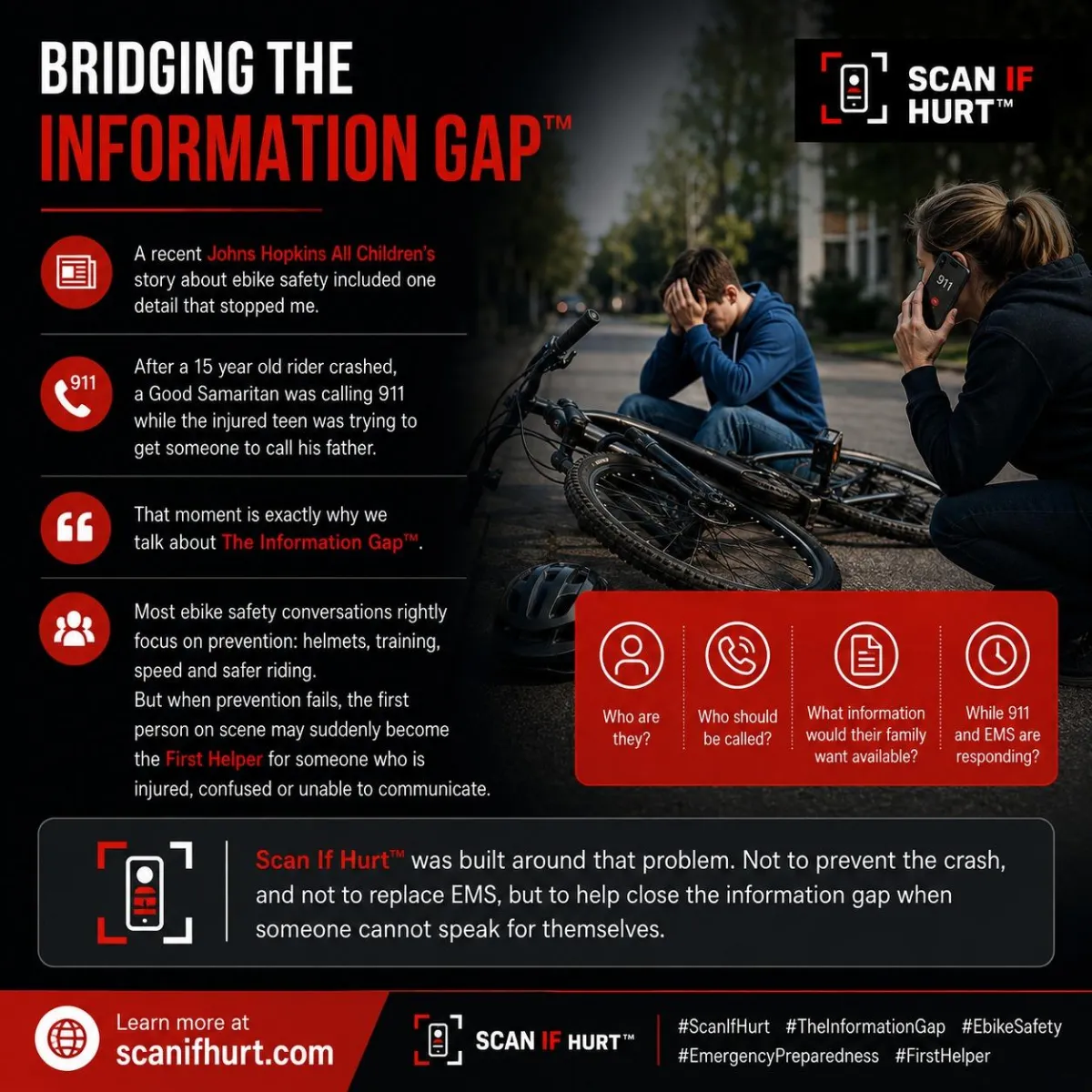
The rider may be the only person with the answers — Imagine a young rider is hurt and cannot communicate clearly. The first person who stops may be a stranger, another parent, a teacher, a police officer or someone passing by. They can call 911. But they may still know almost nothing about the injured person. What is their name? Who should be contacted? Is there information the rider or family wanted available in an emergency? When the person who needs help cannot provide those answers, an information problem begins at the same time as the medical emergency. We call that The Information Gap™.
A different layer of preparedness — Scan If Hurt™ was built around that narrow post-incident problem. It gives a person a Personal Emergency Profile they control and a Safety ID that can be scanned when they cannot speak for themselves. The information shown is information the person or family chose to make available. The goal is not to diagnose, treat or replace emergency services. It is simply to give the First Helper access to useful information that otherwise may be unavailable in those first minutes. Scan If Hurt™ does not prevent e-bike crashes. It does not replace helmets, training, 911, EMS or medical care. It addresses what happens after prevention has already failed and someone suddenly needs help.
Safety has more than one layer — Colorado’s rising injury numbers should continue to drive conversations about safer riding, age-appropriate equipment, education and enforcement. They should also prompt a second question: If a serious crash happens and the rider cannot answer for themselves, what information will the First Helper have? That question is not about replacing prevention. It is about being prepared for the moment prevention was not enough.
